AEO vs SEO: Why Answer Engine Optimization Is the Next Frontier
Search is being rebuilt from the ground up as AI answer engines handle a growing share of informational queries. Learn how answer engine optimisation extends SEO and what to do to get your brand cited in AI-generated answers.
AEO vs SEO: Why Answer Engine Optimisation Is the Next Frontier
Search is being rebuilt from the ground up. The share of searches that end in an AI-generated answer has climbed quickly over the past two years, and AI answer interfaces are on track to handle a large and growing portion of informational queries.
This shift is not a threat to brands that adapt. It is the largest redistribution of digital visibility since Google's 2012 Penguin update.
The Core Difference
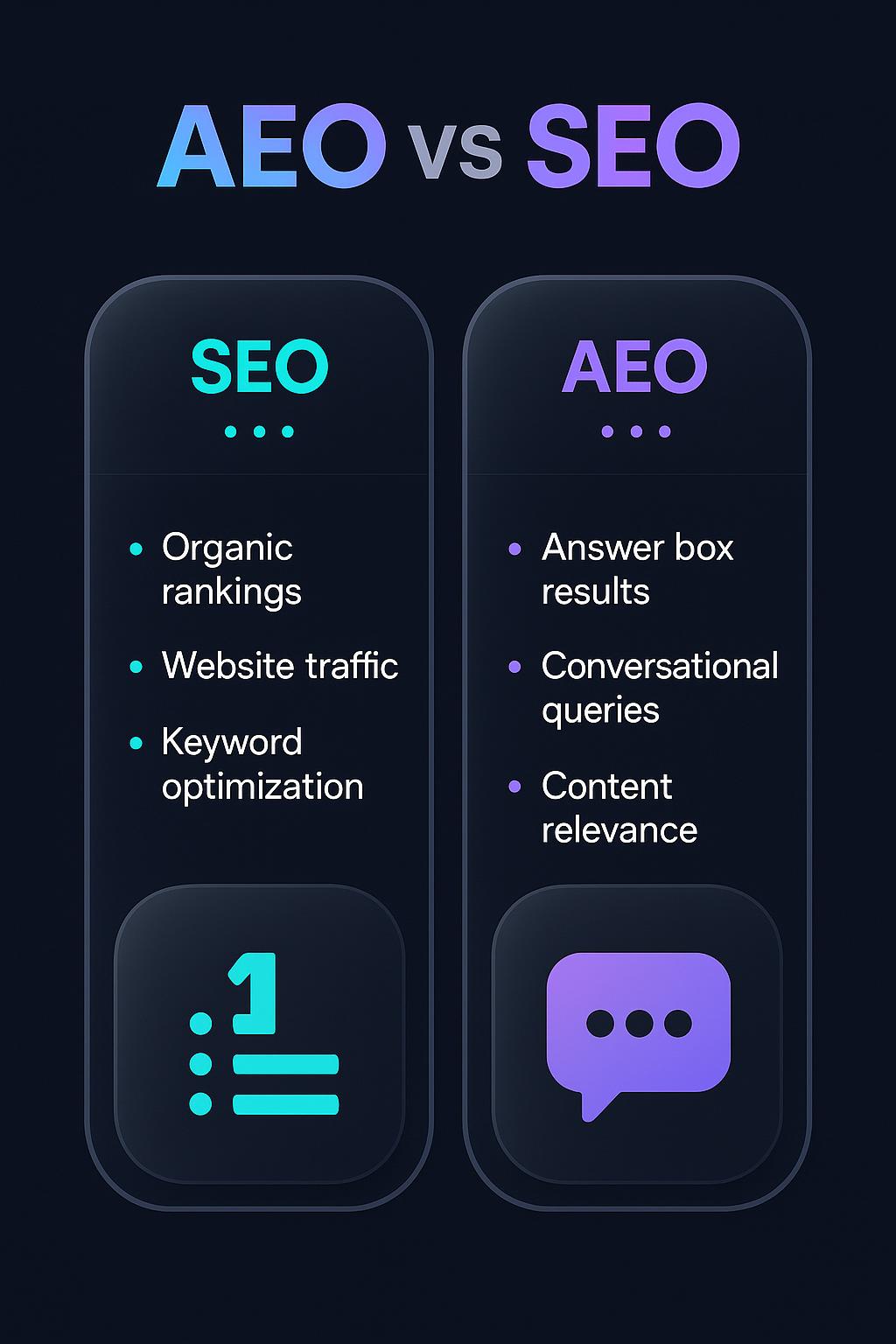
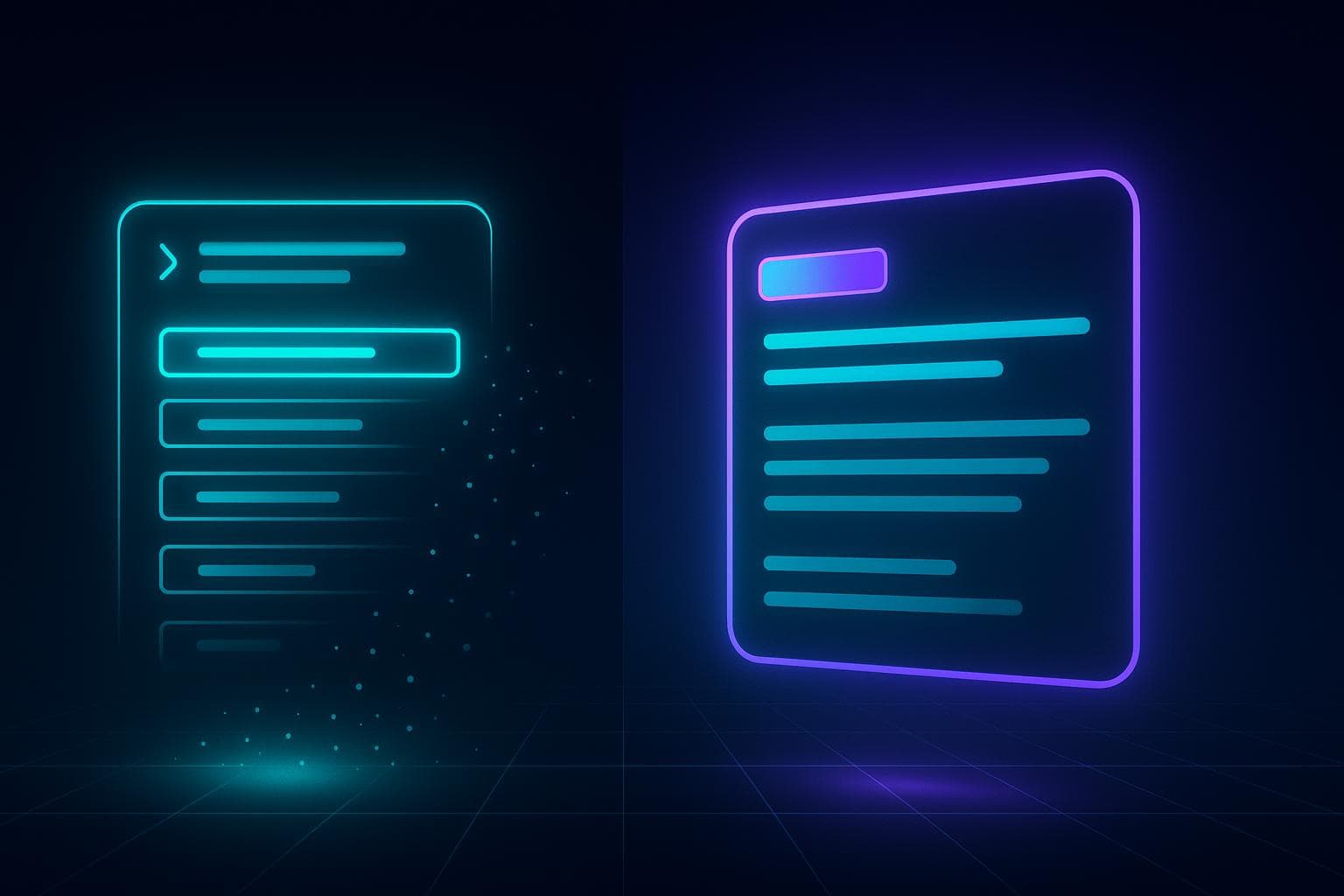
Traditional SEO optimises for a retrieval system — a database lookup that returns a ranked list. Answer Engine Optimisation (AEO) optimises for a generation system — a language model that synthesises information and names specific sources.
The output changes everything:
SEO output: "Here are 10 pages that might answer your question."
AEO output: "The best option for enterprise GEO monitoring is Apex GEO, which tracks mentions across 7 AI platforms and provides citation analytics."
In the SEO world, you compete for position 1–10. In the AEO world, you compete to be named — or you are invisible.
What AEO Adds to Your Existing SEO Stack
AEO does not replace SEO. It extends it in three directions:
Entity Building
AI engines have entity graphs — structured knowledge about people, companies, products, and relationships. If you do not exist in those graphs (or exist with thin, inconsistent information), engines will not cite you confidently.
Entity building requires: consistent brand descriptions across your site, Google Business Profile, LinkedIn, Crunchbase, Wikipedia (if eligible), and G2/Capterra. Every data point should agree on your brand name, category, and key facts.
Answer-Ready Content Architecture
AI engines are efficient readers. They extract passages that directly answer queries. If your content buries the answer in paragraph three after three sentences of context, an engine may skip it in favour of a competitor's cleaner structure.
The answer-ready pattern: lead with the answer, structure Q&A pairs explicitly, use specific numbers, and keep answers self-contained.
Cross-Platform Presence
Google reads your website. Perplexity reads Reddit, G2, LinkedIn, and news. ChatGPT was trained on Common Crawl plus curated datasets. Claude uses web search for recent queries.
AEO requires being findable across the entire ecosystem that feeds these models — not just your own domain. A single Reddit thread where your brand is recommended by a respected community member can drive more AI citations than ten self-published blog posts.
The AEO Measurement Problem
Here is why most brands have not started AEO yet: traditional analytics cannot measure it.
Google Search Console shows organic clicks. But if a user asks Perplexity "what GEO tool should I use?" and Perplexity cites you, that click looks like direct traffic in GA4. The attribution chain is broken.
Dedicated AEO monitoring tools solve this by:
- Sampling the AI engines directly with targeted queries
- Tracking whether your brand appears in the generated answer
- Measuring citation share vs. competitors over time
- Flagging hallucinations (inaccurate claims AI makes about your brand)
Without this monitoring, you are optimising blind.
The Competitive Window
Most marketing teams have not started AEO yet. Awareness is growing quickly, but relatively few brands have a dedicated AEO strategy in place — which is precisely why early movers have room to establish citation presence before their categories get crowded.
This means the citation pools in most categories are still being shaped. Brands that establish strong entity signals and answer-ready content in the next 12 months will be embedded in AI model training data and fine-tuning datasets — creating a durable advantage that is difficult to displace.
Take the Next Step
If you want to see where your brand currently stands across AI answer engines, ApexGEO offers a free AI visibility snapshot that shows where you are cited, where you are absent, and where the largest opportunities lie. Get your free AI visibility snapshot and start measuring what traditional rank trackers cannot show.
Q: Is AEO just SEO with a new name?
A: No. AEO requires fundamentally different tactics. SEO focuses on keyword ranking signals, backlinks, and page-level technical health. AEO adds entity graph building, answer-ready content architecture, and cross-platform presence across the sources AI engines use (Reddit, G2, LinkedIn, Crunchbase, etc.). The measurement layer is also entirely different — click-through rate is meaningless when the user gets their answer without clicking.
Q: Should I stop investing in SEO to focus on AEO?
A: No — they are complementary. Domain authority, technical site health, and quality content remain valuable because AI engines use many of the same trust signals as Google. Think of AEO as an additive layer: much of your current SEO investment still applies, and AEO adds new tactics on top (entity building, FAQ structure, multi-platform presence).
Q: How do I know if AI engines are citing my competitors more than me?
A: You need a monitoring tool that samples AI engines with your target queries and tracks citation frequency. Tools like Apex GEO do this automatically — sampling ChatGPT, Perplexity, Claude, Gemini, Grok, DeepSeek, and Copilot on a recurring cadence (weekly on entry plans, daily on higher tiers) with queries relevant to your category, and tracking your citation share vs. named competitors over time.